



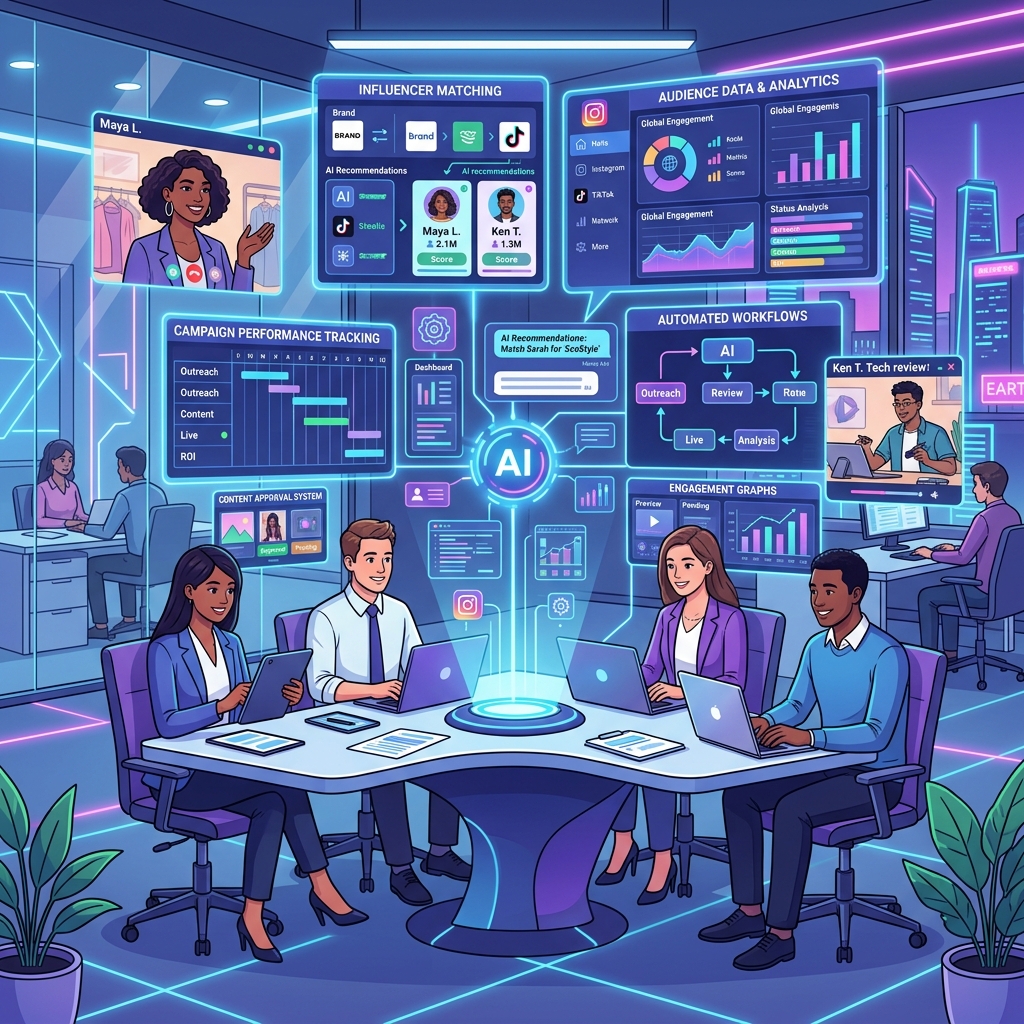
Transforming Influencer Campaigns with AI-Driven Workflows
In today’s fast paced digital landscape, influencer collaborations can feel like navigating a crowded marketplace. Brands seek authentic voices, precise targeting, and measurable results, while creators crave clear expectations and fair compensation. AI-powered workflows offered by a digital marketing agency reshape this dynamic, turning complex campaigns into streamlined, scalable processes. By connecting data, content, and reach through intelligent automation, influencer collaborations become more strategic, compliant, and impactful for a broad audience.
Foundation of AI Enhanced Collaboration
At the heart of AI driven influencer campaigns lies a strong framework that aligns brand goals with creator strengths. A proficient digital marketing company begins by mapping audience segments, brand voice, and product benefits into a shared playbook. AI tools then analyze content performance from diverse creators, highlighting those whose authentic style resonates with target demographics. The result is a curated pool of partners who can authentically tell a brand story without feeling forced or contrived. This foundation reduces negotiation friction and accelerates onboarding, allowing teams to move from concept to content creation with confidence.
Streamlined onboarding and contract management are crucial. AI-assisted contract templates speed up negotiations, ensure consistency in compensation models, usage rights, and content ownership, and maintain compliance across jurisdictions. For brands, this means faster go-to-market timelines; for creators, it means clear expectations and fair terms. The collaboration workflow becomes not just efficient but also trustworthy, a vital consideration in the YMYL space where accuracy and reliability matter deeply to consumer trust.
Targeted brief development and concept validation
When a digital market agency crafts a campaign, the brief sets the tone, goals, and boundaries. AI augments this stage by translating strategic objectives into precise creative briefs that creators can execute with confidence. Natural language processing parses brand language and audience signals, surfacing compelling themes, formats, and hooks that align with evolving consumer interests. Early concept validation bots simulate how different creators’ audiences might respond to various angles, enabling rapid iteration before any production budget is committed.
This early validation reduces the risk of misalignment, a common pitfall in influencer programs. Brands can see which concepts are most likely to drive engagement and conversions, while creators understand which ideas align with their personal brand. The workflow encourages collaborative ideation rather than one-sided brief pushing, fostering a sense of partnership that resonates with audiences who crave authenticity.
Campaign execution powered by intelligent asset management
Content production is where AI truly shines in influencer workflows. A digital marketing company can orchestrate multiple shoots, edits, and approvals across a distributed creator network. AI can organize asset catalogs, tag video clips, photos, and captions by mood, lighting, or platform, and auto-suggest edits to optimize for feeds, reels, or stories. Automated content calendars synchronize posting windows with audience peak times, competitor activity, and paid media plans.
Quality assurance checks, automated captioning and translations, and brand safety monitoring help maintain consistency across all collaterals. NLP driven sentiment analysis tracks how messaging lands with different segments, enabling quick tweaks while preserving creator voice. This level of oversight preserves brand integrity without stifling creativity, a balance that is essential for enduring influencer partnerships.
Measurement and optimization for sustainable results
A core benefit of AI in influencer workflows is measurement that goes beyond vanity metrics. AI dashboards fuse data from earned media, paid amplification, product links, and first-party analytics to show how each creator contributes to the funnel—awareness, engagement, consideration, and conversion. Model-based attribution helps determine the incremental lift from influencer activity, while real-time anomaly detection flags unusual spikes or declines that require attention.
With clear KPIs such as return on ad spend, cost per acquisition, and audience quality scores, teams can optimize campaigns on the fly. AI nudges teams toward scaling what works, pausing what underperforms, and re-allocating budget toward creators whose audiences demonstrate the strongest alignment with the brand’s value proposition. This iterative, data-informed approach delivers sustainable impact rather than one-off success.
Governance, compliance, and trust in influencer marketing
Trust is the currency of influencer campaigns, and AI can bolster it through transparent governance. A digital marketing agency can implement auditable workflows that document every decision, approval, and change in the campaign lifecycle. Content compliance checks ensure disclosures are correct and visible, aligning with platform policies and regulatory requirements. Creator ethics monitoring helps prevent misrepresentation or unsafe claims, protecting both the brand and the audience.
Privacy considerations are also important. AI platforms can manage data minimization and consent artifacts, ensuring that audience data is used responsibly and securely. Brands that prioritize responsible data practices build credibility with consumers who are increasingly vigilant about how personal information is handled. This emphasis on ethics enhances E-E-A-T signals, strengthening authority and trust with readers and customers.
GPT-5-Nano as a Benchmark for AI Driven Collaboration
Emerging AI models like GPT-5-Nano illustrate how compact, efficient AI can empower influencer workflows without demanding immense computational resources. A digital market agency can leverage such models to generate briefing summaries, draft creator outreach messages, or craft personalized content variations while maintaining brand voice. The light footprint of GPT-5-Nano makes it accessible to agencies of varying sizes, enabling more teams to experiment with AI-enhanced collaboration without prohibitive costs.
In practice, GPT-5-Nano can assist in script optimization, caption creation, and rapid A/B testing of messaging variants across different creator segments. It excels at handling repetitive, high-volume tasks with accuracy, freeing human experts to focus on creative strategy, relationship building, and high-value negotiations. The result is a more scalable operation that preserves the human touch where it matters most—authenticity, alignment, and partner relationships.
Choosing the right digital marketing agency for AI powered influencer programs
Selecting a digital marketing agency that can deliver AI augmented influencer workflows requires evaluating several capabilities. Look for a partner with a proven track record in influencer marketing, a robust data stack, and a transparent approach to governance and measurement. The agency should demonstrate how it integrates AI into each stage of the lifecycle—from onboarding and brief creation to content production, measurement, and optimization. A clear emphasis on privacy, compliance, and creator empowerment signals a mature and responsible operation.
Ask about platform interoperability. The ideal agency can connect creator marketplaces, social platforms, CRM systems, and analytics dashboards to create a cohesive ecosystem. Evaluate the agency’s approach to talent relationships: how they identify, vet, and nurture creators while safeguarding authenticity and avoiding over-automation that erodes trust. Finally, examine case studies or client testimonials that highlight measurable outcomes, such as improved engagement rates, higher-quality first-party data, and scalable outputs across a diverse creator roster.
Digital marketing agencies and digital marketing companies that invest in AI driven workflows are better positioned to deliver consistent value. They provide a framework that supports informed decision-making, faster time to impact, and a safer path to growth in a complex regulatory environment. This approach benefits not only brands seeking to amplify their messaging but also audiences who expect honest, relevant, and respectful communication from creators they follow.
Maximizing value for diverse brands and audiences
Influencer collaboration workflows powered by AI enable campaigns across industries to maintain relevance without sacrificing integrity. For a casino and gaming audience, responsible messaging and clear disclosures are essential. AI helps tailor content to audience interests while adhering to platform rules and regulatory requirements. By balancing entertainment with responsible gaming information and transparent sponsorships, campaigns can engage audiences in meaningful ways while preserving trust and compliance.
As technology evolves, the human element remains central. AI acts as a force multiplier, handling repetitive tasks, data analysis, and optimization at scale. Human strategists and creators then apply insight, empathy, and storytelling to craft messages that resonate on an emotional level. This combination creates a durable competitive advantage for digital marketing agencies and their clients, delivering authentic collaborations that stand out in a crowded digital marketplace.
In conclusion, AI powered influencer workflows offer a compelling path for digital marketing companies seeking to optimize collaboration, deliver measurable outcomes, and build lasting trust with audiences. By combining rigorous governance, ethical standards, and advanced AI capabilities, digital marketing agencies can transform influencer programs into efficient, scalable engines of growth. This approach aligns with the evolving expectations of consumers, platforms, and regulators, ensuring that brands and creators can thrive together in a dynamic, connected world.
So, It gave me some useful insights.