



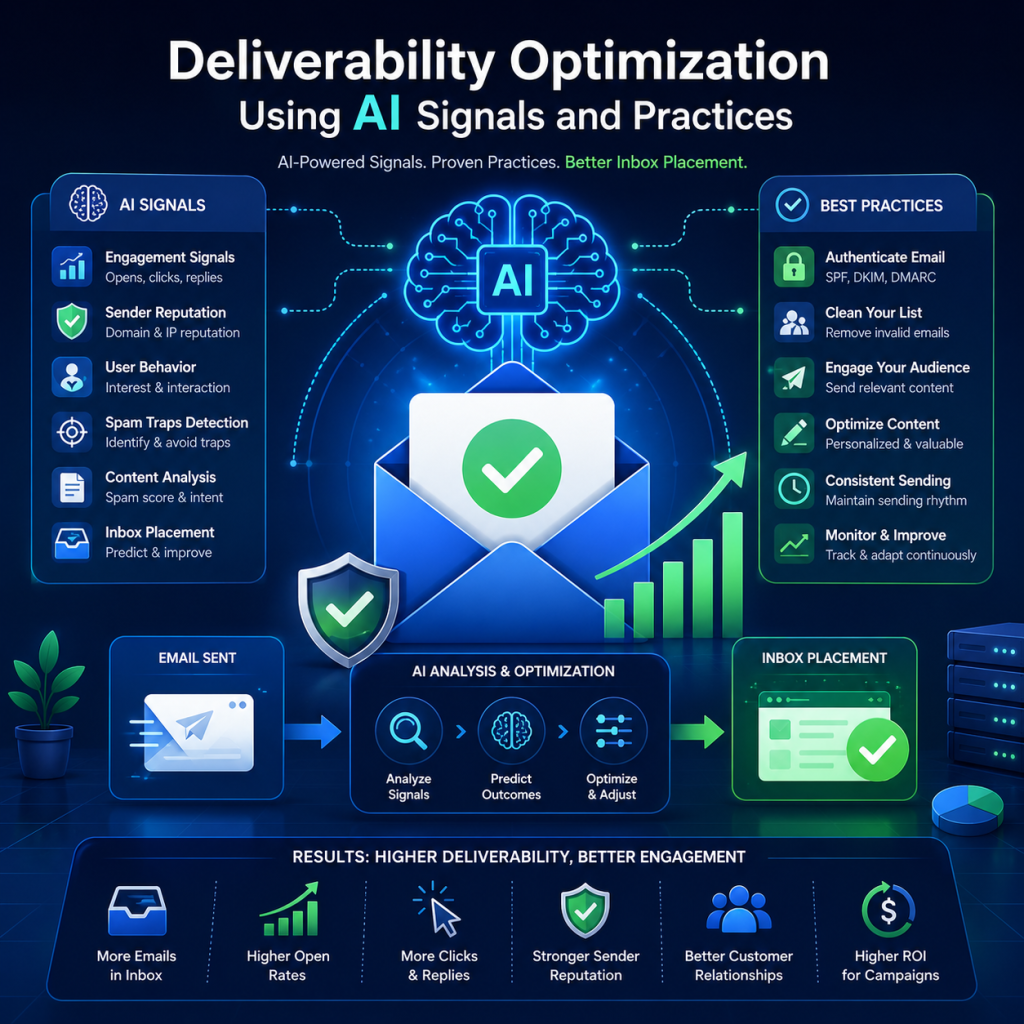
Deliverability optimization in the age of AI signals is reshaping how digital marketing agencies deliver measurable results for clients. For a digital marketing SG audience, the promise is clear: higher inbox placement, stronger sender reputation, and more reliable engagement. As the landscape evolves, agency digital marketing teams are adopting advanced AI-driven practices to forecast deliverability outcomes, fine-tune campaigns, and protect long-term sender trust.
AI signals that influence deliverability go beyond open rates. Modern AI models analyze engagement signals, recipient sentiment, time-of-day patterns, device types, and historical inbox behavior to forecast whether a message will land in primary folders or get trapped in promotions, spam, or junk. This shift allows a digital marketing Singapore operation to move from reactive tweaking to proactive governance, ensuring every message respects user preferences and inbox hygiene. By integrating AI into the core workflow, digital marketing agencies can deliver higher-quality mail streams, reduced bounce rates, and improved deliverability scores that translate into tangible ROIs for clients.
Understanding sender health is foundational to deliverability optimization. A robust sender reputation rests on consistent sending patterns, accurate authentication, and transparent engagement metrics. AI-powered systems monitor domain alignment, SPF, DKIM, and DMARC correctness in real time, flagging anomalies such as sudden spikes in volume or shifts in IP reputation. For digital marketing agencies serving Singapore-based clients, this translates into tighter governance around list acquisition practices, permission-based marketing, and opt-in consent, all of which support long-term inbox credibility. The result is not merely better deliverability but also a stronger foundation for data-driven personalization that respects subscriber trust.
Segmentation and personalization are now deliverability accelerants. AI enables granular audience segmentation based on behavior signals, engagement history, and content preferences. Rather than sending uniform campaigns to broad lists, a digital marketing company can design delivery streams that align with recipient likelihood to engage. For example, high-engagement segments may receive richer content and more frequent communication, while dormant segments can be re-engaged with precisely timed, value-driven messages. This nuanced approach reduces complaint rates, improves engagement signals, and signals to mailbox providers that messages come from a responsible sender. Agencies across digital market agency networks leverage these insights to maintain healthy engagement velocity, which is a key predictor of deliverability over the long term.
Content relevance matters for deliverability just as much as subject lines do. AI-assisted creative optimization evaluates how different content blocks perform across devices, inbox clients, and user segments. By testing variants with multivariate experiments and reinforcement signals, an agency digital marketing team can identify the combinations that maximize engagement without triggering spam filters. For digital marketing SG clients, this means crafting messages that honor local user preferences, regional regulations, and language nuances while maintaining compliance with evolving email standards. A well-structured email with meaningful, compliant content is less likely to be flagged and more likely to move readers toward meaningful actions, elevating both deliverability and conversion rates.
Engagement-based feedback loops are central to ongoing deliverability improvement. AI systems continuously ingest metrics such as open rates, click-through rates, conversions, time spent reading, and unsubscribe events to recalibrate send-time optimization and content strategy. For a digital marketing agency SG, this creates a virtuous cycle where each campaign informs the next. Time-zone awareness, weekend vs. weekday patterns, and device-specific rendering are all factored to optimize inbox placement. The result is a more predictable delivery pipeline, fewer red flags with ISPs, and a steadier flow of qualified traffic to clients’ websites and landing pages.
List hygiene and consent management are non-negotiable for sustainable deliverability. AI-driven verification processes help ensure email lists remain up to date, remove stale addresses, and prevent signups from invalid sources. This is particularly important for digital marketing Singapore campaigns that must navigate local privacy expectations and regulatory requirements. By automating double opt-in verification, unsubscribe handling, and preference updates, agencies safeguard sender reputation while maintaining a positive subscriber experience. Clean lists mean higher engagement signals and lower bounce rates, which in turn reinforce deliverability health across campaigns.
Infrastructure and authentication are the quiet engines of deliverability. AI-enabled monitoring dashboards provide real-time visibility into IP addresses, domain reputation, bounce categorization, and feedback loops from mailbox providers. For digital marketing agencies, this means a proactive posture: early detection of deliverability anomalies, rapid remediation, and clear accountability for campaign governance. Ensuring consistent use of authenticated sending domains, properly configured DMARC policies, and alignment between marketing automation platforms and mail transfer agents reduces the risk of misrouting and enhances trust with both subscribers and ISPs. This technical backbone underpins the human aspects of strategy, content, and timing.
Regulatory compliance and risk management are integral to credible deliverability. The evolving landscape of data privacy and email marketing rules requires careful attention to opt-in requirements, data minimization, and transparent consent practices. AI can help enforce compliance by monitoring consent provenance, flagging potential violations, and guiding marketers toward compliant personalization tactics. For digital marketing SG initiatives, this approach demonstrates a commitment to ethical marketing and subscriber protection, reinforcing trust and long-term engagement. A trusted brand in the eyes of subscribers and regulators reduces friction with inbox providers and supports durable deliverability performance.
Testing culture drives continuous improvement. A data-informed testing framework lets a digital marketing company experiment with subject lines, sender names, preheaders, and content blocks without risking broad deliverability impact. AI-powered experimentation accelerates learning by quickly identifying statistically significant winners and predicting how changes will influence future deliverability. Agencies that adopt rapid, iterative testing in their campaigns across digital marketing agencies networks can optimize for both performance and inbox placement. The outcome is a steady stream of learnings that tighten every campaign’s alignment with subscriber expectations and mailbox provider heuristics.
Measurement and attribution elevate deliverability from a technical metric to a business driver. The best practices combine deliverability metrics with business outcomes such as open-to-click conversion rates, revenue per email, and customer lifetime value. AI-enabled attribution models trace how deliverability improvements contribute to on-site engagement and conversions, providing a clear ROI narrative for clients. Digital marketing Singapore agencies can translate technical deliverability wins into tangible business benefits, helping clients see the value of investing in AI-driven practices that protect sender reputation while driving growth.
Audience education and subscriber experience are essential for sustainable success. Effective deliverability optimization depends on transparent communication with subscribers about why they receive emails and how they can tailor their preferences. AI-powered preference centers and dynamic content that respects subscriber choices foster a better user experience, reducing friction and unsubscribes. For digital marketing sg campaigns, prioritizing subscriber-centric experiences signals to mailbox providers that messages come from a respectful sender, which can improve inbox placement over time. A harmonious relationship with subscribers enhances engagement signals, which feeds back into stronger deliverability metrics.
In summary, deliverability optimization using AI signals and practices is a holistic discipline that blends technical rigor, data-driven experimentation, and a human-centered approach to content. Digital marketing agencies and digital marketing Singapore teams that invest in AI-enabled sender health monitoring, segmentation precision, content relevance, engagement feedback loops, list hygiene, authentication, regulatory compliance, testing, measurement, and subscriber experience create a resilient deliverability framework. This framework supports not only higher inbox placement but also better engagement and meaningful business outcomes for clients. For digital marketing agencies and digital market agency networks, the payoff is a reliable channel that scales with growth, builds trust with subscribers, and differentiates the agency in a competitive landscape. By embracing AI signals responsibly and maintaining unwavering attention to quality, agencies can deliver consistent, compliant, and compelling communications that resonate with audiences across Singapore and beyond.